
This post may contain affiliate links. When you purchase through links on our site, we may earn an affiliate commission. Read our affiliate disclosure
Do you have baking sheets that have greasy staining, burnt areas, or sticky residue that just will not come off? It can happen to even the finest pans, and though it may feel impossible to clean off the layers of baked-on grease. Don’t worry, here, I will share with you a simple solution.
You don’t need expensive or harsh chemicals to clean your baking sheets! You just need vinegar! You probably have this in your pantry. Vinegar will break down grease, loosen stubborn dirt, and generally make cleaning your baking sheets much simpler.
In this guide, I’ll detail exactly how to clean your baking sheets using vinegar step by step. I will also suggest some easy ways to speed up the process and keep your baking sheets looking great longer.
What Causes Grease Buildup on Baking Pans
If you use an oven at home or in a factory, your baking sheet will become dirty and lose its shine. This can happen for several reasons. One of them is the oil and fat from food. Whether you cook chicken, grill, make biscuits, or cook any other item, an oily coating forms. Grease and oil from foods like butter, cooking spray, or roasted meats stick to the metal when you bake at high heat. This is what later turns your baking sheet brown, even black. Each time you use your pan, a thin layer of oil hardens and builds up, trapping crumbs and making the pan look darker. The hotter your oven, the faster this happens. Regular dish soap often isn’t enough to remove this baked-on grease, which is why using vinegar and a good scrub works so well.
Which Baking Sheet Types Are Suitable for Cleaning with Vinegar?
If you use baking sheets made of aluminum, stainless steel, or uncoated metal, cleaning them with vinegar is ideal for these materials. These materials tolerate a thorough soak in vinegar and a strong scrub with a scrubbing brush. If you have nonstick or ceramic-coated pans, be careful. Scrubbing too hard can damage the coating and make your pan wear out faster. For this type of baking sheet, try soaking them in warm, soapy water with a little baking soda instead. Using this vinegar method will make stainless steel and aluminum baking sheets look shiny and clean.
How to Clean Baking Sheets with Vinegar and Baking Soda
Step-by-Step Guide/Instructions:
First, pour some warm water into your baking sheet and let it sit for a bit. This helps soften that stubborn, baked-on mess.
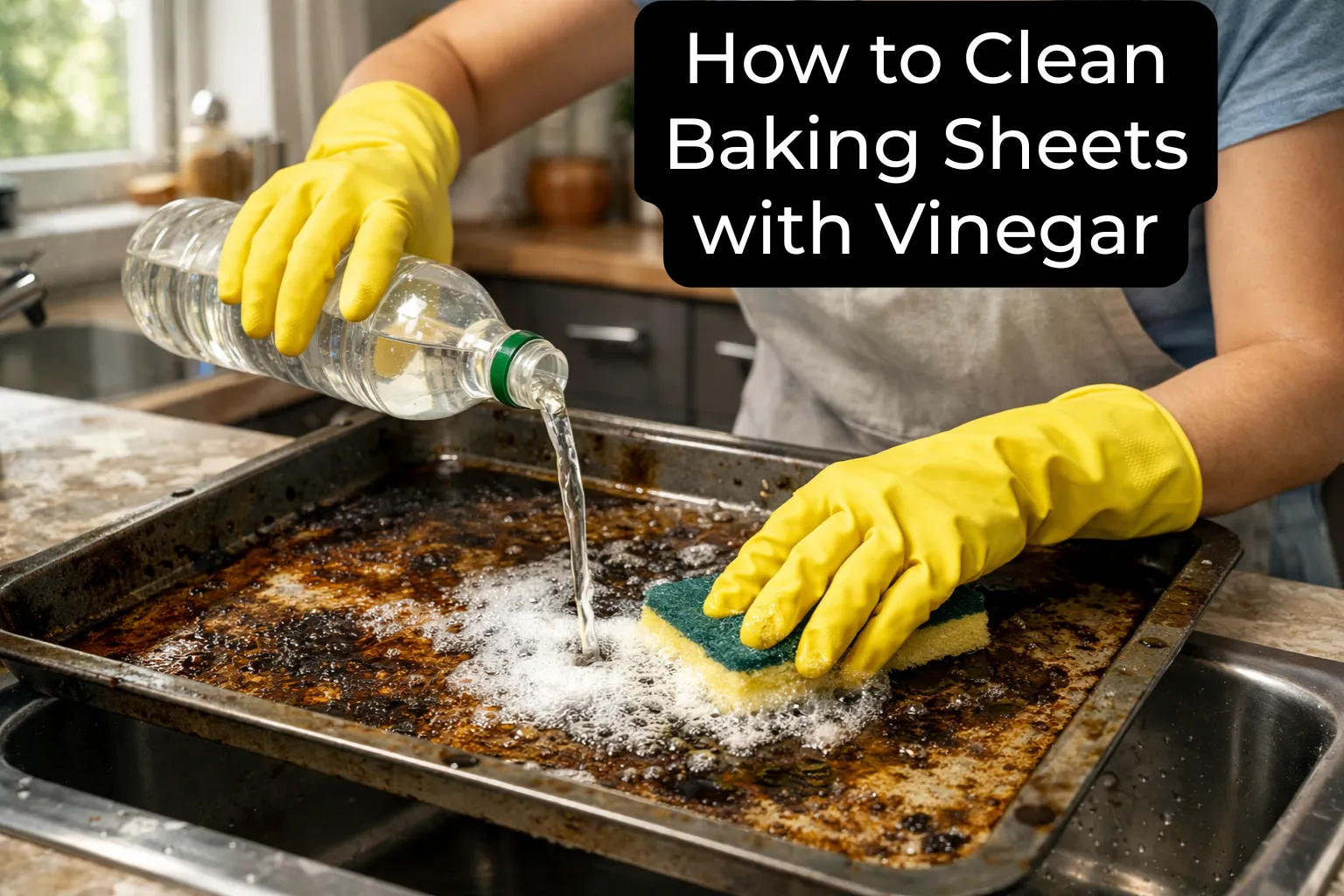
Next, sprinkle about 1 or 2 tablespoons of baking soda over the surface. Then, pour in a quarter cup of distilled vinegar. It’ll fizz up (always a little fun to watch), and that’s when things start working.
Give it at least 5 minutes to sit. If your baking sheet’s extra greasy, letting it hang out overnight makes a big difference.
Now, add some Dawn dish soap. This stuff cuts through grease like nothing else.
Grab some steel wool and start scrubbing. Really focus on the corners—grease loves to hide out there. Keep at it until the gunk fades away.
Important Notes:
Focus on the corners of your baking sheet, since that’s where the stubborn grease likes to hide. Keep scrubbing until you see the gunk start to disappear.
You shouldn’t have to work too hard—the vinegar and baking soda should have already loosened up most of the tough stuff.
Extra tip: If you wash your baking sheets right after you use them, cleaning gets a lot easier, and you’ll avoid that sticky buildup in the corners.
Safety Notes/Advice While Cleaning With Vinegar
Vinegar cleans naturally and safely, but you have to rinse thoroughly afterward. If any vinegar stays behind, you’ll notice a smell or even a weird metallic taste in your baked goods. Steel wool can tackle tough messes, but it’s pretty harsh and might scratch delicate surfaces. Test it on a tiny spot first—if you spot scratches or dull areas, switch to a softer sponge or pad. And honestly, don’t use steel wool on glass, enamel, or nonstick baking sheets. It’ll ruin them.
Why Should You Clean Your Baking Sheet Properly?
If you love baking, you probably use your baking sheets all the time. But if you don’t clean them well, old burnt grease can build up and make your treats burn or taste bitter. No one wants that. To keep your baking sheets in good shape, it’s important to give them a deep clean every now and then.
When to Change Your Baking Sheet?
Baking sheets don’t last forever, even with good care. You should replace them if the coating is peeling, the edges are bent, or there are large rust spots. Warped pans don’t heat evenly, which can affect your baking. Heavy rust can be unsafe, especially if flakes get into your food. If your pan still works but looks dull, that’s normal wear. But if you see uneven spots that cause burning or black stains that won’t come off, it’s time for a new one. Using clean, fresh pans will help your baked goods look their best.
No Steel Wool or Vinegar? Try These Options
If you don’t have steel wool or would rather skip the vinegar, you still have plenty of options.
Try a baking soda paste. Just mix 2-5 tablespoons of baking soda with one tablespoon of water or hydrogen peroxide. Spread the paste over your baking sheet and let it sit for at least 20 minutes. After that, scrub with a sponge and rinse.
You can also use lemon and salt. Sprinkle some coarse salt over the baking sheet, then cut a lemon in half and use it to scrub the surface. The lemon is a natural cleaner that helps break down grease, and the salt gives you a gentle scrub.
Another trick is to use dish soap and a dryer sheet. Fill your sheet with warm, soapy water and drop in a dryer sheet. Let it soak for about 60-90 minutes. This helps loosen stuck-on grease so you can wipe it away easily.
These techniques work well for non-stick or delicate pans or sheets that can’t handle harsh scrubbing, but they’ll still make your baking sheets clean and bright.
Things You Should Never Do When Cleaning Baking Sheets
Steel wool can help with burnt stains, but if you use it too much, it will scratch your pan. This might damage the nonstick coating and expose the metal to rust. Over time, your food might not cook evenly.
Don’t scrub your pan too hard. Pressing down won’t make it cleaner, but it can wear away the coating and fade the finish. This means your baking sheet won’t last as long.
Never mix strong cleaners like bleach, ammonia, or vinegar together. This can make dangerous fumes and damage your pan. It might also leave behind stuff you don’t want near your food.
Oven cleaner is strong and not safe for every pan. It can strip the coating off aluminium or non-stick baking sheets and leave stains. Always check if your pan is safe for oven cleaner before you use it.
If you have tough, baked-on grease, soak your pan first. Skipping this step just makes cleaning harder and can lead to scrubbing too hard, which can damage the surface.
Don’t put a hot pan straight into cold water. The sudden change can warp your pan, so it won’t sit flat or cook food evenly anymore.
Avoid using sharp tools like knives or forks to scrape off grease. They can scratch your pan and make it easier for food and grease to stick in the future.
Always check the care instructions for your baking sheet. Different materials need different care, and following the instructions can help you avoid damage.
Don’t let grease build up on your baking sheets. If you clean them regularly, you’ll avoid tough stains, bad smells, and poor cooking results.
Conclusion
Keeping your baking sheets clean is easier than you might think. With just a little vinegar, you can get rid of baked-on grease and bring back its shine. This simple, natural method helps you save your pans and skip the harsh chemicals or expensive cleaners.
Read also:
How To Clean Wooden Spoons and Cutting Boards

My name is Mostarefa. I am a content creator and editor of ideasformyhome.com. I am an expert in home improvement. In this blog, I write about home improvement ideas, trending home decor ideas, and cleaning & organizing tips.