
This post may contain affiliate links. When you purchase through links on our site, we may earn an affiliate commission. Read our affiliate disclosure
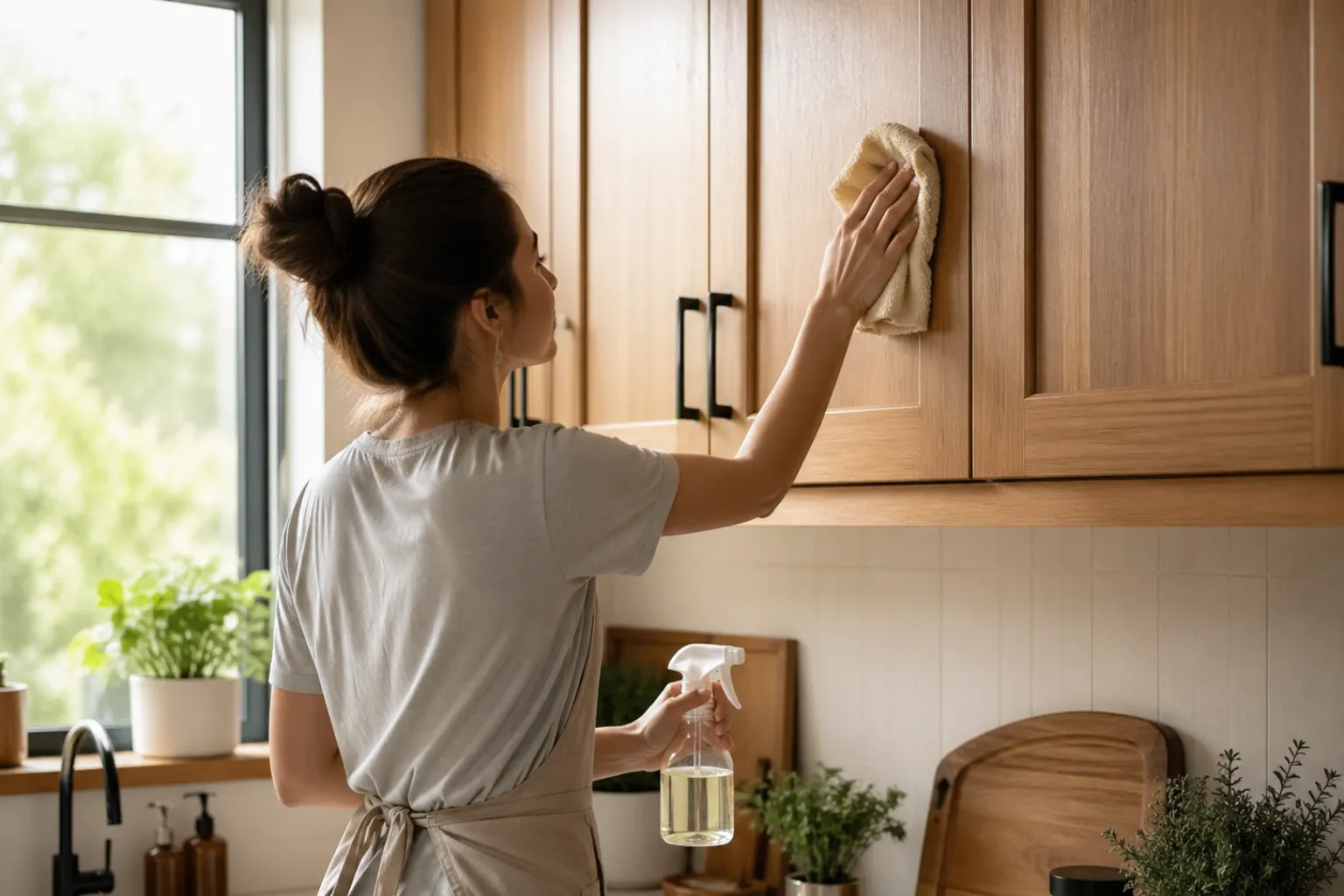
Cleaning wooden kitchen cabinets can seem tricky, especially when grease, stains, and dullness build up. Wood needs more care than other surfaces because it can soak up moisture or harsh cleaners, which may cause lasting damage. Using gentle methods and the right products helps protect your cabinets and keeps them looking their best.
This guide will show you easy and safe ways to clean your cabinets. Each step is clear, so you’ll understand what to do and why. Whether you’re tackling dust or tough grease, these tips will help your wooden cabinets stay beautiful without damage.
Why Wooden Kitchen Cabinets Get So Dirty
Wooden cabinets get dirty mainly because of cooking. When you fry or cook food, tiny oil particles float in the air and land on cabinet surfaces. At first, you may not notice it. But over time, this oil becomes sticky grease.
Dust in the air sticks to this grease and forms a thick layer. That’s why cabinets near the stove become dirtier faster than others. If your kitchen does not have good airflow or an exhaust fan, the grease builds up even more quickly.
Typical Issues When Cleaning Wooden Kitchen Cabinets
If you’ve ever tried to clean your wooden cabinets, you know it’s not always as simple as it seems. Sometimes, cleaning brings up unexpected problems. Here’s what you might notice:
Sticky grease that just won’t budge:
Even after wiping, some greasy buildup seems to stay put. This is usually because the layer is thick and needs a few gentle, repeated cleans.
Water damage and swelling:
Getting wood too wet can make the edges swell or lose their shape, so it’s important not to overdo it with water.
Streaks or cloudy spots:
If you notice lines or cloudy marks after cleaning, it’s often because soap or water wasn’t wiped away completely.
Scratches on the surface:
Rough sponges or too much scrubbing can leave scratches on your cabinets, making them look worn.
Dull or faded finish:
Using harsh cleaners or too much soap can strip away the wood’s natural shine and leave it looking tired.
Unpleasant smells inside cabinets:
Leftover food crumbs, spills, or moisture can cause cabinets to develop bad odors over time.
Mistakes to Avoid When Cleaning Wood Cabinets
To keep your wood cabinets looking great, try to avoid some common mistakes. Strong chemical cleaners can harm the finish and change the color, and using too much water can cause swelling or other problems. Scrubbing too hard might scratch the surface and make cabinets look worn. If you don’t dry them after cleaning, leftover moisture can cause stains or mold. Also, using too much soap can leave a sticky film that attracts more dirt.
How to Clean Wooden Kitchen Cabinets (Step-by-Step)
Here are some simple steps for safe and effective cleaning. Be gentle with the wood and take your time for the best results:
Step 1: Remove Dust
Use a dry, soft microfiber cloth or feather duster to carefully wipe away dust from all cabinet surfaces, including door frames, corners, and edges. Removing dust first helps prevent scratches and makes cleaning easier.
Step 2: Prepare a Mild Cleaner
In a bucket or bowl, mix a few drops of mild dish soap (I recommend Dawn Platinum Plus Dish Soap and Amazon Basics Liquid Dish Soap) with warm (not hot) water. Avoid harsh chemicals or strong soaps. For extra cleaning power, especially for oily cabinets, you can add a splash of white vinegar, but use it sparingly to avoid dulling the finish.
Step 3: Wipe Gently
Dip a clean, soft cloth into your soapy water and wring it out until it is just damp—not wet. Gently wipe all cabinet surfaces, working in the direction of the wood grain. Pay attention to handles, knobs, and grooves, which collect the most grime. Don’t forget the cabinet edges and undersides.
Step 4: Clean Greasy Areas
For spots with stubborn grease (usually near the stove), apply a bit of your cleaning solution directly to the area. Let it sit for a minute to loosen the grease, then wipe gently with your damp cloth. If needed, repeat this process rather than scrubbing hard, which can damage the wood.
Step 5: Wipe Again
Rinse your cloth in clean water, wring it out well, and wipe down all surfaces again to remove any soap residue. Leftover soap can attract more dirt and leave streaks, so make sure to go over every area.
Step 6: Dry Immediately
Finally, use a separate dry, soft towel to gently dry all cabinet surfaces. Drying right away prevents water spots, swelling, or damage to the wood. Open cabinet doors for a few minutes to help air out any remaining moisture.
What are the Best Natural Cleaners for Wood Cabinets
The most popular natural cleaners for wood kitchen cabinets are white vinegar, mild dish soap, olive oil, and baking soda. These gentle cleaners safely remove grease and grime, protecting the wood’s finish and preventing damage over time.
Vinegar and Water (Daily/Weekly Cleaning):
Mix equal parts warm water and white vinegar in a spray bottle. Lightly mist onto a soft cloth (not directly on wood) and wipe surfaces to remove fingerprints, dust, and light grease. Vinegar dissolves grime, but test first, as finishes vary. Avoid on unfinished or waxed wood.
Mild Dish Soap and Water (Tough Grease):
For greasy buildup around handles or near the stove, mix mild dish soap with warm water. Dampen a microfiber cloth and gently clean, wiping along the wood grain. Rinse the cloth and wipe again to remove soap residue. Dish soap is safe for most finishes and better than vinegar for heavy grease.
Murphy Oil Soap:
This plant-based cleaner is designed for finished wood. Add one capful to a gallon of warm water, mix, and wipe with a soft cloth. Murphy Oil Soap cleans and conditions, restoring shine without residue. Follow instructions and avoid over-wetting.
Baking Soda Paste (Stubborn Stains):
For sticky spots or dried food, make a baking soda paste with water. Apply gently with a soft cloth or old toothbrush in small circles. Don’t scrub hard as baking soda is abrasive. Wipe clean with a damp cloth and dry immediately. Good for stains, not for general cleaning.
Extra: You can use wood polish spray after cleaning to enhance the shine of your wooden cabinet. I recommend this: Pledge Enhancing Wood Polish
How to Remove Sticky Grease from Wood Cabinets
Grease can be one of the hardest things to remove from wooden cabinets, but you can handle it safely and easily with the right steps:
1. Mix a few drops of mild dish soap with warm water to create a gentle cleaning solution. For extra power on stubborn grease, add a small amount of white vinegar, but avoid using it on unfinished or unsealed wood.
2. Dip a soft microfiber cloth or sponge into the solution, then wring it out so it’s damp, not wet. Excess water can damage wood.
3. Gently wipe the greasy area, always moving in the direction of the wood grain. Don’t forget to clean around handles, corners, and grooves where grease hides.
4. For thick or stubborn grease, apply the cleaning solution directly to the spot and let it sit for 2-3 minutes. This helps soften the grease without needing harsh scrubbing.
5. Use a soft-bristled brush (like an old toothbrush) to clean grooves or detailed areas if needed. Avoid abrasive pads, as these can scratch the finish.
6. Wipe away loosened grease with a clean, damp cloth, then immediately dry the area with a separate soft towel to prevent moisture damage.
7. If any sticky residue remains, repeat the process. It’s safer to clean in several gentle passes rather than scrubbing hard, which can harm the wood.
How to Restore Shine to Wooden Kitchen Cabinets
If your cabinets look dull after cleaning, you can bring back their shine with a few easy steps. Start by making sure the cabinets are fully clean and dry before you use any products.
Choose a high-quality wood polish like Pledge Enhancing Wood Polish or a conditioner specifically designed for wood surfaces—avoid products with silicone or wax, as these can leave residue and attract dust.
Pour a small amount of polish onto a soft, lint-free cloth, then gently rub it onto the cabinet surface using circular motions. Pay extra attention to areas that look faded or worn.
After applying the polish, use a second clean cloth to buff the surface in the direction of the wood grain until it looks smooth and shiny. This step not only enhances the wood’s natural luster but also helps protect it from future stains and moisture.
Remember not to use too much polish; a light application is all you need, as excess product can build up and make the wood look greasy or attract more dirt over time. For best results, repeat this process every few months or whenever your cabinets begin to look dull.
How to Prevent Water Damage & Maintain Wood Cabinets
To avoid water damage and keep your wooden cabinets in good shape, use a damp (not wet) cloth, dry the cabinets right after cleaning, wipe up spills quickly, and make sure your kitchen has good airflow. These simple habits will help your cabinets last longer.
How to Remove Odors & Keep Cabinets Fresh
Cabinets can sometimes start to smell bad because of moisture, food spills, or stale air. Keeping them fresh not only makes your kitchen nicer but also helps stop mold and mildew. Here are some things you can try:
– Place a small bowl of baking soda inside the cabinet to absorb odors. Replace it every month for best results.
– Use activated charcoal or odor-absorbing sachets as a natural alternative to baking soda. These work well for persistent smells.
– Clean inside shelves, doors, and corners regularly with a mild cleaning solution to remove food residue and prevent bacterial growth.
– Make sure cabinets are completely dry after cleaning, as lingering moisture is a common cause of bad odors.
– Keep cabinet doors open for a few hours after deep cleaning or whenever you notice a musty smell. Good airflow helps dry out any hidden moisture and refreshes the air inside.
– For extra freshness, place a small cotton ball with a drop of vanilla extract or lemon oil inside the cabinet (out of reach of children and pets).
Practicing these habits will help keep your cabinets smelling fresh, reduce the risk of mold, and maintain a clean kitchen environment.
How to Clean Hard-to-Reach Areas of Kitchen Cabinets
It’s easy to miss certain areas of your kitchen cabinets during regular cleaning, but these hidden spots can gather a lot of grease, dust, and grime. Paying extra attention to them helps prevent buildup and keeps your cabinets looking their best.
Areas that often get missed include:
– Behind handles and knobs
– Corners and edges
– Grooves or decorative designs in the wood
– The top of cabinets where dust and grease settle
– Hinges and around hardware
– Along the inside lip of cabinet doors
To clean these spots:
1. Remove any knobs or handles if possible, so you can access the entire area underneath. Soak hardware in mild soapy water and clean with a soft brush.
2. Use a soft-bristled brush, like an old toothbrush or small paintbrush, to gently loosen dirt from grooves, corners, and detailed areas. Dip the brush in a mild cleaning solution for extra effectiveness.
3. For the top of cabinets, use a step stool to safely reach, and wipe with a damp microfiber cloth. If the grease is heavy, let the cleaning solution sit for a minute before wiping.
4. After cleaning, dry all areas thoroughly with a clean, soft towel to prevent moisture damage.
5. Make cleaning these spots part of your regular routine—aim for once a month or whenever you notice buildup.
Final Thoughts
Cleaning wooden kitchen cabinets can be simple. Use gentle methods, avoid using too much water, and clean them regularly. Soft cloths and mild cleaners help protect the wood’s finish. Wipe up spills quickly and dry surfaces well after cleaning to prevent stains or water damage. For best results, make cabinet cleaning part of your monthly routine.
With the right care, your cabinets will stay clean, shiny, and sturdy for years. Regular maintenance keeps them looking good and helps you avoid expensive repairs or replacements later on.

My name is Mostarefa. I am a content creator and editor of ideasformyhome.com. I am an expert in home improvement. In this blog, I write about home improvement ideas, trending home decor ideas, and cleaning & organizing tips.