
This post may contain affiliate links. When you purchase through links on our site, we may earn an affiliate commission. Read our affiliate disclosure
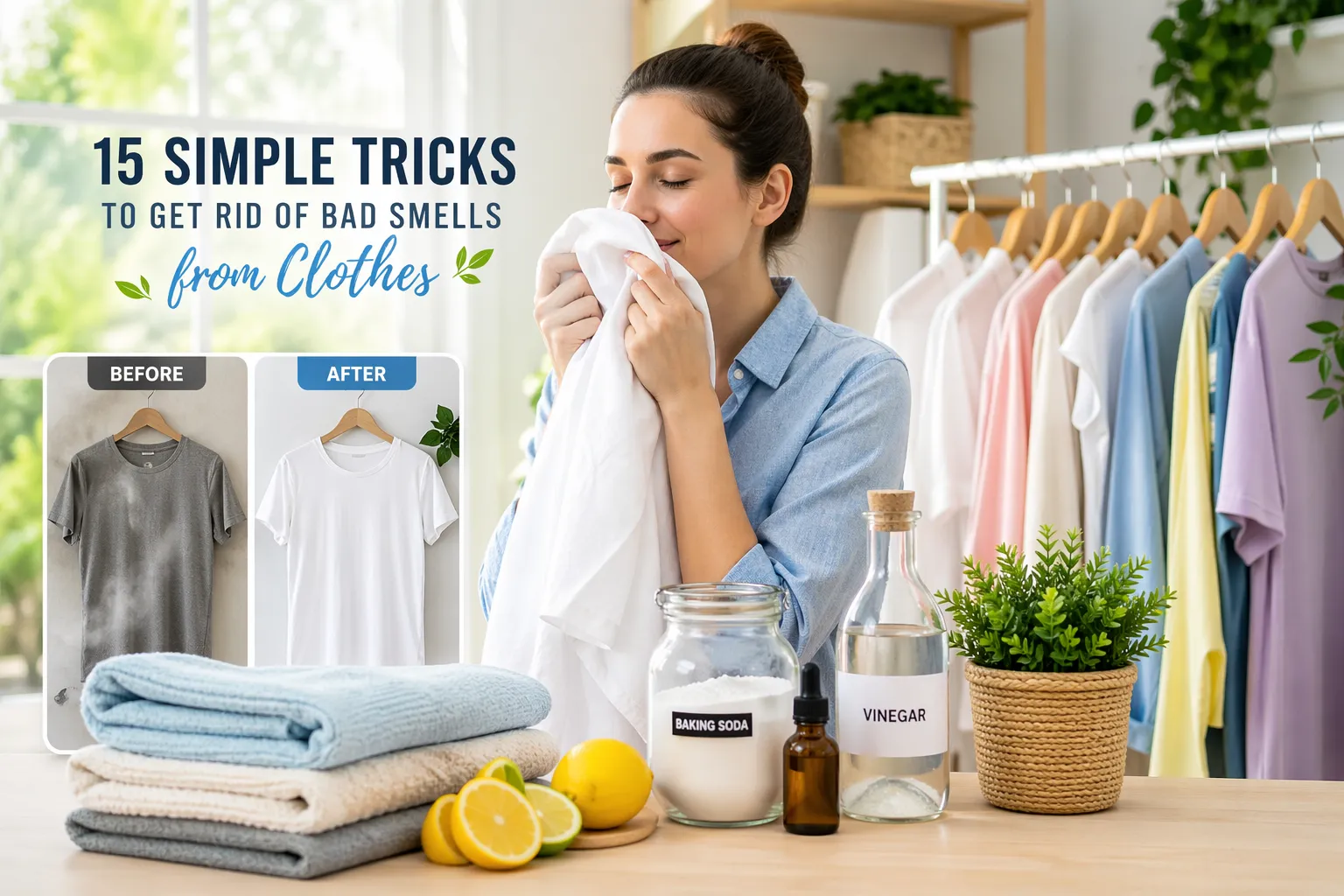
Do your clothes still smell unpleasant after washing? This is a common issue and can be quite frustrating. This unpleasant odor is usually caused by trapped moisture, bacteria, or improper drying and storage habits.
But don’t worry, the good news is that you don’t have to live with it. With the right techniques and simple household solutions, you can easily remove stubborn smells and restore freshness to your clothes.
In this guide, I have shared 15 practical and effective ideas from natural remedies to smart laundry habits that will help you get rid of bad odors and keep your wardrobe smelling clean and fresh every day.
🌿 Natural & Household Solutions
1. Lemon Juice Treatment
Lemon juice is a strong natural deodorizer because it has a lot of citric acid, which breaks down oils, sweat, and smelly bacteria stuck in fabric fibers. It not only gets rid of bad smells but also leaves a light, fresh scent. You can add a cup straight to your washing machine as a natural softener or mix it with water to treat very smelly spots before washing. Drying clothes in sunlight makes its bacteria-fighting power stronger and keeps them fresher.
Pro tip: Always test lemon juice on colored fabrics first to avoid light bleaching effects.
2. White Vinegar Wash
White vinegar is well known for its ability to remove strong smells. It works by breaking down leftover detergent, killing germs, and removing mildew stuck deep in fabrics. Adding one cup of vinegar during the wash helps make clothes fresh again without harming them. It works especially well for towels and thick fabrics that hold moisture. Vinegar also naturally softens fabrics, making it a good choice instead of chemical softeners.
Pro tip: The vinegar smell disappears completely after drying, leaving clothes fresh and clean.
3. Alcohol and Water Spray
Alcohol works as a cleaner that kills the bacteria causing bad smells. When mixed with water and sprayed on clothes, it gets into the fabric and removes the germs that cause bad odors. Because alcohol dries fast, it takes away smell particles without leaving any leftover scent. This way is especially good for delicate clothes or things that cannot be washed often.
Pro tip: Use a fine mist and avoid soaking fabric to prevent water spots or uneven drying.
4. Baking Soda Paste or Shake Method
Baking soda is one of the best natural ways to get rid of bad smells. It works by balancing out acidic and basic odor molecules instead of just covering them up. Putting a paste on smelly spots helps it reach and remove odors deep inside the fabric. Another way is to put clothes in a bag with baking soda so it can quickly soak up nearby smells. This method is gentle, safe, and good for most types of fabric.
Pro tip: For stronger odors, leave baking soda on overnight before brushing it off for deeper absorption.
5. Coffee Grounds Absorption
Used coffee grounds work well to get rid of smells because they contain nitrogen, which cancels out odors in the air and on fabrics. When put in a closed bag with clothes, the grounds slowly soak up bad smells. This is a good way to freshen clothes kept for a long time or things that are hard to wash. Clothes might smell a little like coffee at first, but that goes away after airing them out.
Pro tip: Make sure the grounds are dry to avoid staining or adding moisture to your clothes.
6. Essential Oil Spray
Essential oils offer antibacterial effects and a nice natural smell. Oils such as lavender, lemon, and grapefruit help fight bacteria that cause odors while freshening fabrics. Mixing a few drops with water makes a light spray that can be used on clothes without washing. This way is perfect for quick freshening or keeping clothes fresh between washes, especially for clothes that have been worn only a little.
Pro tip: Use sparingly—too much oil can leave marks or overpowering fragrance on fabric.
7. Borax Soak
Borax is a strong cleaner that removes mold, mildew, and bacteria stuck in fabrics. When mixed in hot water, it softens minerals in the water and improves cleaning, letting it reach deep into thick fabrics like towels and bedding. Soaking clothes in a Borax mix before washing helps get rid of stubborn smells that regular detergents often cannot remove. It is especially helpful for laundry that still smells bad after washing.
Pro tip: Best used for heavy fabrics like towels and bedding where odors are deeply embedded.
☀️ Air & Temperature-Based Methods
8. Sunlight Drying
Sunlight naturally cleans clothes because its ultraviolet (UV) rays kill bacteria and mildew spores that cause bad smells. Also, fresh outdoor air helps get rid of moisture trapped in fabrics, stopping more odors from forming. Drying clothes in the sun not only removes smells but also makes whites brighter and freshens fabrics without using chemicals.
Pro tip: Turn clothes inside out to protect colors from fading while still benefiting from sunlight.
9. Freezing Clothes
Freezing is an unusual but effective way to get rid of smells by killing or stopping the bacteria that cause odors. Putting clothes in a sealed bag keeps moisture out while the cold helps remove smells. This method is especially useful for delicate fabrics or items like jeans that should not be washed often. After freezing, letting the clothes air out makes them fresher and removes any leftover smells.
Pro tip: Combine freezing with sunlight drying for a double-action odor removal method.
🏠 Closet & Storage Solutions
10. Open Closet Doors
Closets that do not have good airflow often hold in moisture, which helps mold and mildew grow. Leaving closet doors open lets air move through, letting moisture out and stopping bad smells. This easy habit can greatly cut down on bad odors over time, especially in damp areas or crowded storage spots. It also keeps clothes stored inside smelling fresher.
Pro tip: Open your closet for a few hours daily, especially in humid climates, to maintain freshness.
11. Use a Fan for Airflow
In places where fresh air does not flow well, using a fan can greatly improve air movement. Good airflow lowers humidity and stops moisture from building up, which causes mold and bad smells. A small fan put inside or near the closet keeps air moving, helping clothes stay dry and fresh. This is especially helpful during rainy times or in closed storage spaces.
Pro tip: Use this method during rainy or humid seasons when natural ventilation is limited.
12. Remove Old Clothing
Old, unused clothes often develop hidden bad smells because they sit untouched for a long time, trapping moisture and dust. These clothes can hold mold and bacteria that cause smells to spread to other clothes. Regularly cleaning out your wardrobe not only frees up space but also improves air circulation and cleanliness. Getting rid of extra items helps keep your clothes and space fresher and cleaner overall.
Pro tip: Donate or recycle clothes instead of storing them long-term in closed, damp spaces.
13. Deep Clean Your Closet
Closets can build up dust, dirt, and mold over time, which can cause bad smells. A deep cleaning means taking everything out, wiping all surfaces, and letting the area dry fully before putting things back. This gets rid of hidden smells and makes a fresh space for your clothes. Cleaning regularly stops problems from coming back and keeps your storage area clean.
Pro tip: Use a mild vinegar solution when cleaning to kill bacteria and prevent odor return.
🔄 Combined & Preventive Methods
14. Air Out Clothes Regularly
Even clean clothes can start to smell musty if they sit unused in closed spaces for a long time. Letting them air out now and then helps get rid of trapped moisture and freshens the fabric naturally. Hanging clothes outside or in a place with good airflow lets fresh air move through the fabric, stopping bad smells from building up without needing to wash them again.
Pro tip: Do this monthly for seasonal clothes to keep them fresh without frequent washing.
15. Keep Clothes Completely Dry
Moisture causes bad smells, so drying clothes well is very important. Even a little dampness can make clothes grow mildew fast if put away too soon. Make sure clothes are completely dry before folding or hanging to stop bacteria and bad smells. Be especially careful with thick fabrics like jeans and towels because they hold moisture longer than light clothes.
Pro tip: If unsure, let clothes air dry an extra hour—slight dampness can quickly turn into mildew.
Final Talk
Smells don’t develop on clothes quickly, and they don’t go away right away either. There is no shortcut way to remove bad smells from your clothes. You have to try various methods I have mentioned above. Experiment with them and identify which one works best for you. If this guide helps you, feel free to share on your Pintertest profile.

My name is Mostarefa. I am a content creator and editor of ideasformyhome.com. I am an expert in home improvement. In this blog, I write about home improvement ideas, trending home decor ideas, and cleaning & organizing tips.