
This post may contain affiliate links. When you purchase through links on our site, we may earn an affiliate commission. Read our affiliate disclosure
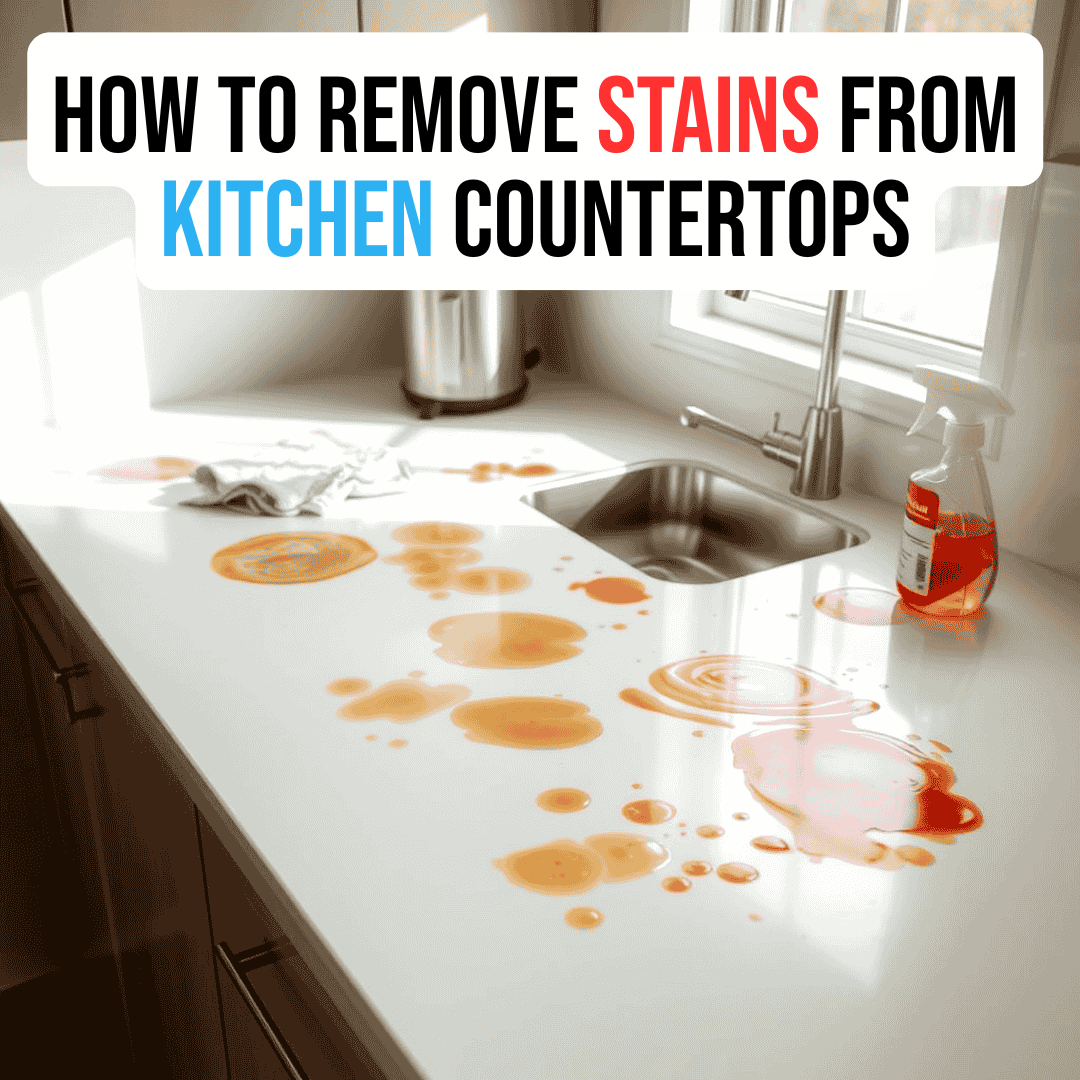
While important for food preparation, kitchen countertops are a magnet for food stains, coffee, alcohol, grease, and food coloring. Learning how to appropriately clean these stains will allow your countertop to maintain its pristine look and extend its lifespan. This guide will detail each step required to tackle each stain with the proper cleaner according to your specific countertop material. You’ll also discover effective ways to prevent future stains and maintain a sparkling kitchen.
How to Remove Stains from Kitchen Countertops: Step-by-Step Instructions for Every Material
Step 1: Prepare the Work Area
Before you start treating stains, make sure your workplace is clean and free of debris and residue.
Clear the Countertop: Take all small appliances, utensils, and plates off the counter. This enables you to reach and clean every place without interruption.
Wipe the Surface: Using a soft cloth or sponge, thoroughly clean the surface with warm water and a few drops of mild dish soap. This initial cleaning eliminates surface dust, crumbs, oil, and light residues, making it simpler to detect and treat stains immediately.
Dry the Surface: Dry the countertop completely with a fresh, dry microfiber towel or gentle cloth. This keeps fresh water marks from appearing and guarantees that stains are visible for focused cleaning.
With proper preparation, it becomes easier to spot stains and choose the best way to clean them for your particular countertop.
Step 2: Identify the Type of Stain and Countertop Material
Every type of stain and every countertop material requires its own cleaning process. The very first thing to know is what type of stain you are dealing with and what type of countertop you are using.
Oil-Based Stains: Caused by ingredients such as butter, cooking oil, or fatty meals. These stains frequently penetrate porous surfaces such as granite or marble, appearing as darkish spots. They might be obstinate and require particular treatment, such as a poultice or degreasing cleanser.
Water-Based Stains: Juice, coffee, tea, wine, and sauces are all considered water-based stains. Particularly on non-porous surfaces like quartz or laminate, these stains are usually more colorful and tend to remain on the surface. Water-based stains are typically easy to get rid of, but other stains, like those from coffee or red wine, can be difficult to get rid of.
Chemical Stains: Chemical stains are caused by contact with bleach, strong cleansers, or acidic materials (like vinegar or lemon juice). If left untreated, they can permanently harm natural stone surfaces by etching or discoloring them. Chemical stains can show up as faded or dull patches.
Note: Choosing the right cleaning method depends on both the stain and your countertop material. Always check manufacturer guidelines to avoid damage.
Step 3: Start With the Most Mild Cleaning Approach
Start with the least powerful cleaning solution and increase strength only if necessary. This protects your countertop’s finish from unnecessary wear. Gather the following supplies before you begin:
Materials you may need:
- Liquid dish soap
- Baking soda
- Hydrogen peroxide (depending on stain type)
- White vinegar (only use if countertop is not made of stone, for example, if the material is laminate or quartz)
- Cloth, microfiber towels
- Rubber or plastic gloves and eye protection (if using chemicals)
How to Remove Stains from Kitchen Countertops: DIY Methods
Baking Soda and Water Paste (Safe for Most Surfaces)
For minor stains on non-porous counters (laminate, quartz) and even as a preliminary treatment on stone surfaces:
- Mix baking soda and water in a 3:1 ratio to create a thick paste. This mild abrasive lifts stains without scratching most surfaces.
- Apply the paste to the stain, let it sit for 5-10 minutes, then gently scrub with a soft-bristle brush or cloth. Avoid using abrasive pads, which can damage the finish.
- Wash with a damp cloth and dry.
Vinegar and Baking Soda (For Non-Stone Surfaces Only)
For more stubborn stains on quartz or laminate surfaces (never on granite or marble):
- Sprinkle baking soda onto the stain.
- Spray or pour vinegar over the baking soda. The mixture will fizz, helping to loosen the stain.
- Wait 10-15 minutes and scrub lightly. Wipe away the mixture with a damp cloth.
Note: Never use vinegar on natural stone (marble, granite, limestone, or travertine). Its acidity can permanently etch and dull the surface.
Apply a Poultice for Stains
A thick paste called a poultice is used to remove deep stains from porous stones like marble and granite. It works well for old wine or oil stains that go beneath the surface and can’t be cleaned with regular cleaners. The poultice pulls the stain out of the stone and into the paste as it dries.
How to use it:
Mix baking soda or talcum powder with water (for most stains) or hydrogen peroxide (for organic stains on light stone) to make a thick paste. For hard stains, add a few drops of dish soap.
Spread the paste over the stain, covering it completely. Cover with plastic wrap and tape the edges to keep it moist.
Leave it for 24 hours (or up to 48 hours for tough stains) to let the paste absorb the stain.
Remove the plastic, scrape off the paste gently with a plastic knife, and wipe the area with a damp cloth. Rinse well.
Repeat if needed. For stubborn oil stains, use a degreaser (I recommend this) or acetone (like this), but test first on a hidden spot and be careful.
Note: Once you have removed the stain from your natural stone, you may wish to reseal it if needed, in order to restore its stain resistance. Regular care will reduce the chance of future stains setting in.
Hydrogen Peroxide for Organic Stains (Light-Colored Stone Only)
Hydrogen peroxide is a very powerful cleaning agent for organic stains on light-colored stone countertops, such as wine, coffee, or food spills. This element is robust enough to remove persistent discoloration while being delicate enough for natural stone.
Use hydrogen peroxide (this is my favorite choice) for coffee, wine, or food stains on light-colored stone countertops.
Detailed Guide:
Take a clean cloth and soak it in 3% hydrogen peroxide. Make sure it’s damp but not dripping.
Place the cloth over the stain, covering it completely. For better results, cover the cloth with plastic wrap to keep it moist.
Let it sit for 10–15 minutes. For tough stains, leave it up to an hour. Check to keep the cloth damp.
Afterward, wipe the area with a damp cloth and dry it well. Repeat if the stain is still there.
Note: Hydrogen peroxide is a relatively gentle bleaching agent. You will not want to use this on darker-toned stones, as it can discolor them. Always try a hidden area of your countertop before applying it to the visible area. Reseal your countertop if it is necessary for stain resistance.
Read also: How to Keep Kitchen Clean and Organized: 15 Practical Tips That Work
How to Use Commercial Countertop Stain Removers (When DIY Fails)
Commercial countertop cleaning supplies or stain removers are excellent alternatives if do-it-yourself techniques don’t work. These are commonly accessible at home improvement stores and are intended to remove stubborn stains that don’t go away with standard cleaning techniques.
Always choose a product made especially for the material of your countertop (granite, quartz, laminate, marble, etc.). Using the incorrect product might result in surface damage or discoloration, which is more detrimental than beneficial. You can see my favorite product here.
Read and follow the label directions, including suggested application times, ventilation, and other essential safety precautions. Wearing gloves is especially crucial while dealing with chemicals to protect your skin and avoid irritation.
Before using the cleaner on a prominent area, try it in an inconspicuous area to ensure that it does not harm or discolor the surface. If no adverse response develops, continue to treat the stain as instructed.
Don’t use abrasive cleaners, steel wool, or scouring pads, as they can damage your countertop. Use a soft cloth or a non-abrasive sponge instead.
Some effective brands include:
- StoneTech Stain Remover
- Bar Keepers Friend (for durable surfaces only)
- Weiman Quartz & Stone Cleaners
- Krud Kutter Cleaner/Degreaser Stain Remover
- Oil Eater Overnight Stain Remover
- Oil Eater Cleaner Degreaser
Note: Do not use rough cleaning products or scrubbing pads, as they will irreparably scratch and mar the surface. If you are unsure what to use, ask your countertop manufacturer or an expert.
How to Clean Various Types of Countertops
Granite and Marble Countertop:
Granite and marble worktops are gorgeous, durable, and timeless, but they require special maintenance to maintain their appearance.
Follow this Guide:
- Never use acidic cleaners like lemon juice or vinegar because they can damage stone surfaces and cause dull spots or marks.
- Use only pH-neutral cleaners made for granite or marble to clean without harming the stone’s finish.
- Seal natural stone countertops every 6 to 12 months to protect them from stains and keep them shiny. Follow the sealant instructions and test by sprinkling water to see if it beads up.
Quartz Countertop:
Quartz countertops are designed to be durable and easy to maintain, but they still require some attention to minimize damage and keep them looking new.
Follow this Guide:
- Don’t use strong alkaline or acidic cleaners on quartz, as they can damage the surface and cause discoloration.
- For daily cleaning, use mild soap, water, and a soft cloth to remove dirt safely.
- Avoid abrasive scrubbers because they can scratch quartz. Use a non-abrasive sponge or towel if you need extra cleaning power.
Laminate Countertop:
Laminate countertops are inexpensive and available in a variety of designs, but they are prone to moisture damage and surface deterioration if not properly maintained.
Follow this Guide:
- Use mild dish soap and warm water on a soft cloth to clean laminate gently and remove everyday messes.
- Don’t let water soak into seams and edges, as it can make the particleboard swell. Always dry the surface completely after cleaning.
- You can use baking soda and vinegar for small stains, but use them carefully and dry well to avoid damage. Never use harsh scrubs or steel wool because they will scratch the laminate.
Butcher Block:
Butcher block counters bring warmth and character to any kitchen, but they require regular maintenance to avoid stains, odors, and drying out.
Follow this Guide:
- For light stains, gently sand with fine-grit sandpaper following the wood grain to remove stains without hurting the wood.
- For tough stains, sprinkle coarse salt on the stain, add lemon juice, and scrub gently. This natural method removes stains and odors. Wipe clean and dry well.
- Re-oil butcher block surfaces every 1–3 months with food-safe mineral oil or beeswax to protect the wood and keep it water-resistant. Apply a good amount, let it soak, and wipe off the extra.
Final Talk
Dealing with kitchen stains can be frustrating, but keeping your counters looking nice is easy. Identify the stain, choose a safe cleaner for your countertop, and clean it right away. Regular cleaning and quick spill cleanup will help your counters stay beautiful for years.
Read also:
15 Practical Tips to Keep the Kitchen Clean and Organized
7 Unique Ideas to Update Old Kitchen Cabinets Without Replacing Them
5 Smart Ways to Organize Under Your Kitchen Sink
40 Best Small Kitchen Storage and Organization Ideas

My name is Mostarefa. I am a content creator and editor of ideasformyhome.com. I am an expert in home improvement. In this blog, I write about home improvement ideas, trending home decor ideas, and cleaning & organizing tips.