
This post may contain affiliate links. When you purchase through links on our site, we may earn an affiliate commission. Read our affiliate disclosure
You will learn: 15 easy, proven, and practical tips to keep your kitchen clean, clutter-free, and organized. These tips will make your kitchen more organized and stylish.
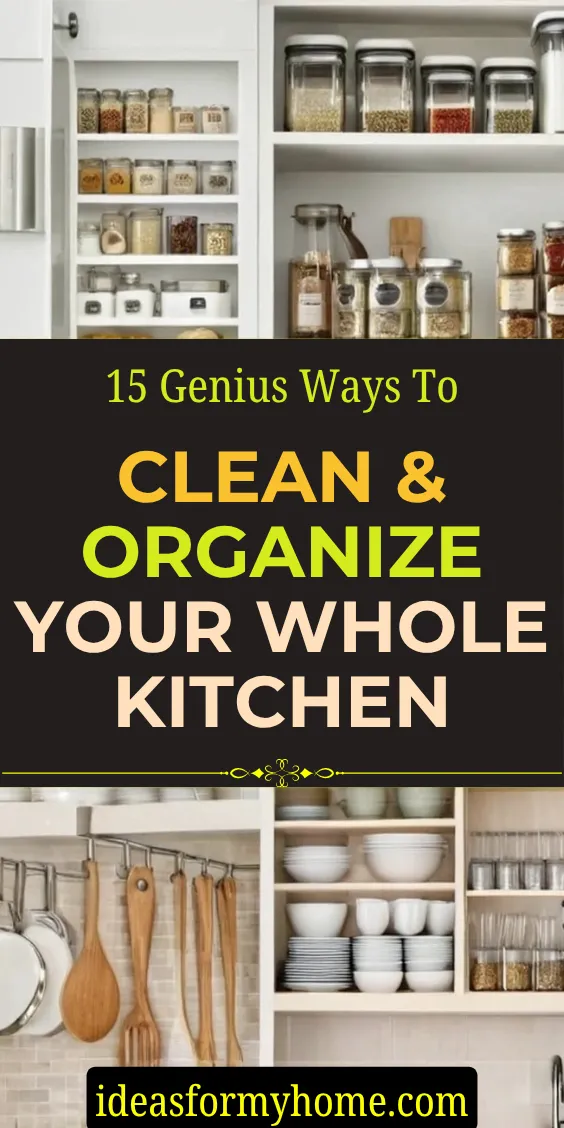
A tidy, clean kitchen not only looks better but also makes cooking easier and can boost your mood. Think about large restaurant kitchens with hundreds of staff — they stay clean because of smart systems and routines. You can apply the same approach at home.
This guide will show you how to clean and organize any kitchen, big or small, open-plan or studio kitchenette. Good design and consistent routines are the keys to a clean, functional kitchen. Read on for practical tips.
15 Practical Tips to Keep the Kitchen Clean and Organized
1. Create efficient workstations
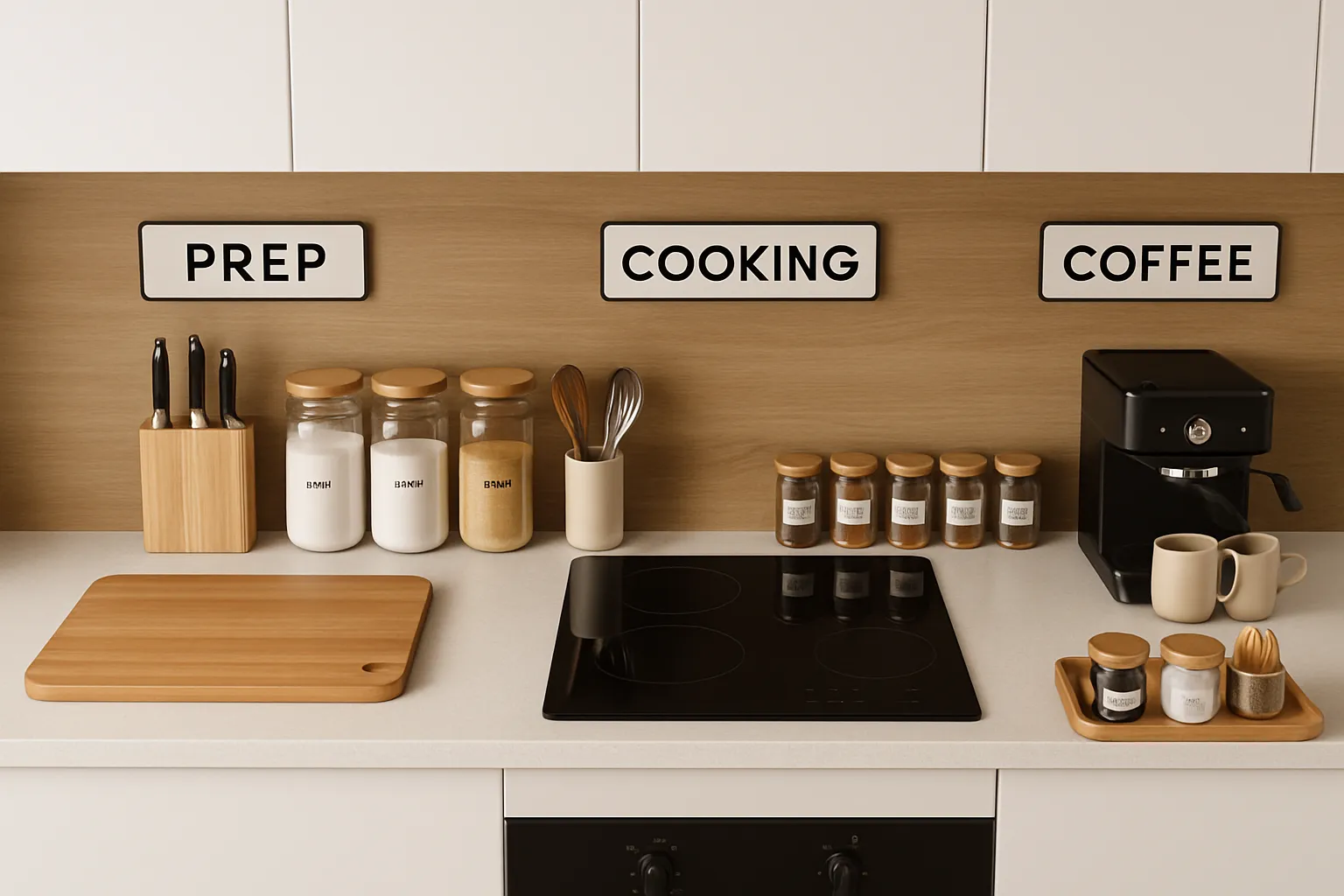
First, think about restaurant kitchens. These kitchens produce hundreds of meals each night using well-designed workspaces. The same strategy can be applied to your home. To do that, segment your kitchen into various areas.
The prep zone, the cooking zone, the cleaning zone, etc. Have all necessary tools and kitchen items within easy access of the workspace flow.
Helpful Tips on Creating Functional Work Stations:
Prep Zone: Cutting boards, knives, mixing bowls, and measuring tools. Create an organizing system for these items using racks, drawer inserts, or hooks to help optimize space and accessibility.
Cooking Zone: Spatulas, tongs, oils, spices, and pots. Use a lazy Susan or divider to organize spices, and use a magnetic strip or utensil holder for access to common cooking tools.
Cleaning Zone: Dish soap, sponges, towels, and trash bags. Utilize a cabinet or drawer to store all the cleaning items. Alternatively, a caddy can be helpful for the transport of cleaning products.
By following these methods, you’ll have a functional and efficient kitchen workspace, which will be more speedy and practical.
2. Keep Counter Space Clear
Keep kitchen countertops tidy and free of clutter to create a more organized, appealing space. Leave only essentials like a coffee maker or toaster out; store other appliances in drawers or cupboards. Wipe countertops regularly and put away small appliances to make cleaning easier and reduce daily stress.
Extra Tips:
Place spices on magnetic racks that adhere to the inside of the fridge, both space-saving and readily accessible.
Add hooks under the cabinets and hang mugs, utensils, or towels to save counter space and increase décor.
Add the space-saving wall-mounted or cabinet-mounted caddies so all the things you use constantly can be tucked away but easily seen and reachable.
Keep an organizer tray or countertop organizer to create separate groupings for commonly used items.
Clean off your countertops every night before you go to bed to eliminate kitchen chaos.

3. Optimize Your Storage with Smart Tools
Choose storage solutions that match your needs and available space to make your kitchen more organized. Use these tips and resources to get the most from your storage.
Cabinet Shelves: Adding shelves to your cabinets can maximize vertical space and storage for plates, glasses, and other small items. Adjustable shelves can hold items of various sizes, and tiered shelves take advantage of every inch of your cabinet space. When selecting a cabinet organizer, ensure it’s made of durable materials, has a non-slip base, and fits within your cabinet space. Find the best Stackable Kitchen Counter Shelf Organizer on Amazon.
Bamboo Plate Racks: These racks save space by arranging dishes vertically while maintaining plate accessibility. Choose racks with non-slip feet or grips to provide stability and avoid slipping. To prolong the life of your bamboo racks and prevent mould or dirt accumulation, clean them on a regular basis. My recommended Bamboo plate rack here.
Modular Drawer Organizers: Modular drawer organizers cut clutter and speed up meal prep by keeping utensils, cutlery, and small kitchen items in separate compartments. Choose adjustable or customizable dividers so the sections fit your own utensils. For hygiene, clean and tidy these organizers regularly. You can check my preferred Plastic Drawer Organizer.
Stackable Storage Shelves: These shelves are ideal for pantry staples, keeping bottles, cartons, and canned goods accessible and organized. Label each shelf for consistency and use clear containers for bulk items so their contents are visible.
Bonus Tip: You can invest in practical, easy organization tools like magnetic spice racks that attach to your fridge or wall to get cabinet space back. Under-the-sink caddies organize cleaning supplies without taking up your counter or cabinet space. When buying organizational tools, make sure to consider their durability and ease of cleaning, as well as their effectiveness in your kitchen.
Read also: How to Update Old Kitchen Cabinets Without Replacing Them? – 7 Unique Tips and Ideas
4. Clean Out Your Utensil Drawer
Keep the utensils together in one drawer, and this will eventually save you a good deal of time and hassle. You can use a modular organizer or drawer dividers that will help you to separate and identify the different utensils you have – forks, knives, spoons, and other utensils. Label the compartments to help you find them faster. Also, declutter and clean the drawer regularly to maintain order and cleanliness, improve kitchen work, and keep utensils in good condition.
5. Store Plastic Bags More Effectively
Plastic bags can quickly become a messy jumble in your kitchen, making them hard to find and use. Instead of stuffing them into a drawer where they get crumpled or lost, install a stainless steel bag dispenser inside a cabinet or on the pantry door. This keeps bags hidden, organized, and easy to grab. To set it up, load the bags into the dispenser and mount it at a convenient height.
Some dispensers have an opening or a slit where you can pull out and hold one bag without pulling out the entire roll. Inspect the dispenser and refill as needed to help stay organized and to make sure you have a bag when needed on your busy shopping days.
6. Keep Your Sink Empty and Clean
A single soiled fork in the sink often leads to more dishes piling up, creating a bigger mess. To prevent this, rinse dishes immediately and place them in the dishwasher or wash by hand. Regularly doing this promotes good habits and keeps the sink clean. A tidy sink fosters a hygienic kitchen, speeds up dishwashing, and reduces clutter, improving overall efficiency and organization.
To clean your entire sink efficiently, try using a Sink Aerator.
7. Wash and Empty the Dishwasher Every Night
Set the coffee machine to make coffee earlier each morning before it’s time to get up. This is the perfect way to wake up and smell freshly brewed coffee right when you get out of bed, and you won’t be waiting for coffee while the dishwasher completes its cleaning cycle during the night. The dishwasher will be emptied in the morning, which will allow you to keep everything organized.
This way, all of your dishes and cookware will be able to be washed each night when they are soiled, preventing your sink and counters from getting cluttered and creating a more hygienic kitchen.
My favorite Dishwasher: COMFEE’ Portable Dishwasher
8. Sweep the Countertops Every Night
Take a few minutes each night to tidy the counters as part of your routine. Clean cooking items, clear away mail, and put things back in their places to prevent piles from forming.
Sort, recycle, and file paper clutter to keep order. A quick wipe of kitchen surfaces, the sink, and the dining area stops trash from building up and leaves the space ready for the next day.
These small nightly habits cut stress, improve cleanliness, and make your home feel more welcoming and organized.
You may read: How to Remove Stains from Kitchen Countertops: A Step-by-Step Guide
9. Clean Kitchen Utensils and Tools Quickly
Cheese graters, strainers, and knives can trap food particles that dry on and become hard to clean. Rinse these items in warm water right after use to stop residue from setting. Use a brush or a suitable cleaning tool to remove remaining bits.
If food is already dried on, soak the item in warm, soapy water for a few minutes before gently cleaning. Dry utensils and tools thoroughly after washing to prevent rust and prolong their life.
Regular cleaning saves time and effort in the long run.
10. Organize Under the Sink
The cabinet beneath your sink is an ideal spot for organizing cleaning supplies efficiently. To maximize space and accessibility, consider using pull-out baskets or drawers, which allow easy access to items stored at the back.
Clear containers are helpful for quickly identifying contents such as sponges, scrub brushes, gloves, and paper towels, reducing search time and clutter. Stackable bins can further optimize vertical space, keeping everything tidy and separate.
Additionally, labeling each container clearly ensures quick retrieval and helps prevent cross-contamination or using the wrong product. Regularly review and declutter this space to discard expired or unused items, maintaining an organized and functional area.
11. Create Kitchen Counter Zones
Assign specific counter locations for particular tasks to enhance organization and efficiency in your kitchen. For instance, designate a corner of your counter for baking supplies, where you can place the stand mixer, measuring cups, and ingredients needed for baking. This dedicated baking area helps contain clutter and streamline your baking process.
Conversely, locate your chopping station near the trash or compost bin to facilitate quick disposal of vegetable peels and scraps, maintaining a tidy workspace.
Additionally, consider clearly labeling these zones or using small trays or containers to further distinguish their purpose. Regularly reassess your setup to ensure these zones remain functional as your cooking habits evolve.
Properly organizing your workspace not only speeds up clean-up but also reduces stress during meal preparation, making cooking more enjoyable.
12. Limit what you allow in
Only put out items that need to be used the same day to keep your space organized and reduce clutter. Overfilled countertops can become a breeding ground for messes, making cleaning more difficult and time-consuming.
By limiting what you display to essentials, you create a clearer, more efficient workspace. Regularly clearing your countertops not only simplifies cleaning but also helps maintain a tidy environment that promotes productivity and relaxation.
Consider establishing a daily routine of tidying surfaces and storing less frequently used items away from immediate reach to sustain a clutter-free zone.
13. Sweep or vacuum your kitchen floors every day
Food crumbs tend to gather quickly in hard-to-reach areas like under cabinets and behind appliances, attracting pests and encouraging mold if neglected. To keep your home clean and healthy, routinely sweep, vacuum, or dampen a Swiffer, especially in the evenings to prevent buildup. Use dryer sheets or microfiber cloths for dusting and regularly check corners and under furniture for hidden crumbs. A weekly cleaning schedule helps maintain a tidy, hygienic space.
My personal choice: Powerful Cordless Stick Cordless Vacuum
14. Gather All Ingredients and Tools Before Cooking
Before you start cooking, gather all your ingredients, tools, and equipment, such as knives, cutting boards, pots, pans, and measuring cups. Check that you have fresh produce, spices, and any special items. Organize everything first to keep things easy and avoid going back and forth.
15. Use Fewer Dishes When Cooking
Minimize dish use by seasoning directly on baking sheets, reusing bowls, and avoiding unnecessary prep containers. Line sheets with parchment or silicone mats for easier cleanup. Clean reused bowls thoroughly to prevent cross-contamination. Batch similar ingredients to reduce utensil use. Fewer dishes mean less cleanup, saving time and effort.
Final Thoughts
Keeping your kitchen clean and organized doesn’t require a total makeover. The key to success is to develop consistent habits, use clever tools, and be thoughtful about planning. By creating smart zones, staying on top of clutter, and optimizing your storage, you can create a kitchen you’ll love, without the mess.
Read also:
Top 6 Ways to Clean Your Kitchen Sink Drain (Fast & Effectively)
How to Update Old Kitchen Cabinets Without Replacing Them? – 7 Unique Tips and Ideas
How to Organize the Space Under the Kitchen Sink?
How to Remove Stains from Kitchen Countertops: A Step-by-Step Guide

My name is Mostarefa. I am a content creator and editor of ideasformyhome.com. I am an expert in home improvement. In this blog, I write about home improvement ideas, trending home decor ideas, and cleaning & organizing tips.